
Rapid City sees more hail activity than most homeowners realize. According to tracking data from Interactive Hail Maps, Doppler radar has detected hail at or near Rapid City on more than 222 occasions, with 13 events recorded in just the past year. Most homeowners in the Black Hills area will eventually face a hail damage roof insurance claim. The problem is that most of them have never done it before.
Filing a hail damage claim is not complicated, but it has real steps that, if skipped or done in the wrong order, can cost you thousands of dollars in missed coverage. This guide walks through the entire process from the day after a storm through the final insurance check, with specific context for South Dakota policies and Pennington County homeowners.
K1 Roofing Inc. has helped Rapid City homeowners through this process for over 30 years. What follows reflects how claims actually work in this market, not a generalized national overview.
What Hail Does to Your Roof (That You Can’t Always See)
Before you can document damage or talk to an adjuster, you need to know what you’re looking for. This is where many homeowners miss coverage they’re entitled to.
Hail damage falls into two categories: functional damage and cosmetic damage. Functional damage means the hail impact has compromised the roof’s ability to shed water or protect the structure. Cosmetic damage is visible but does not affect performance. Most South Dakota homeowners insurance policies cover functional damage. Some policies exclude purely cosmetic damage, so understanding the difference matters before you file.
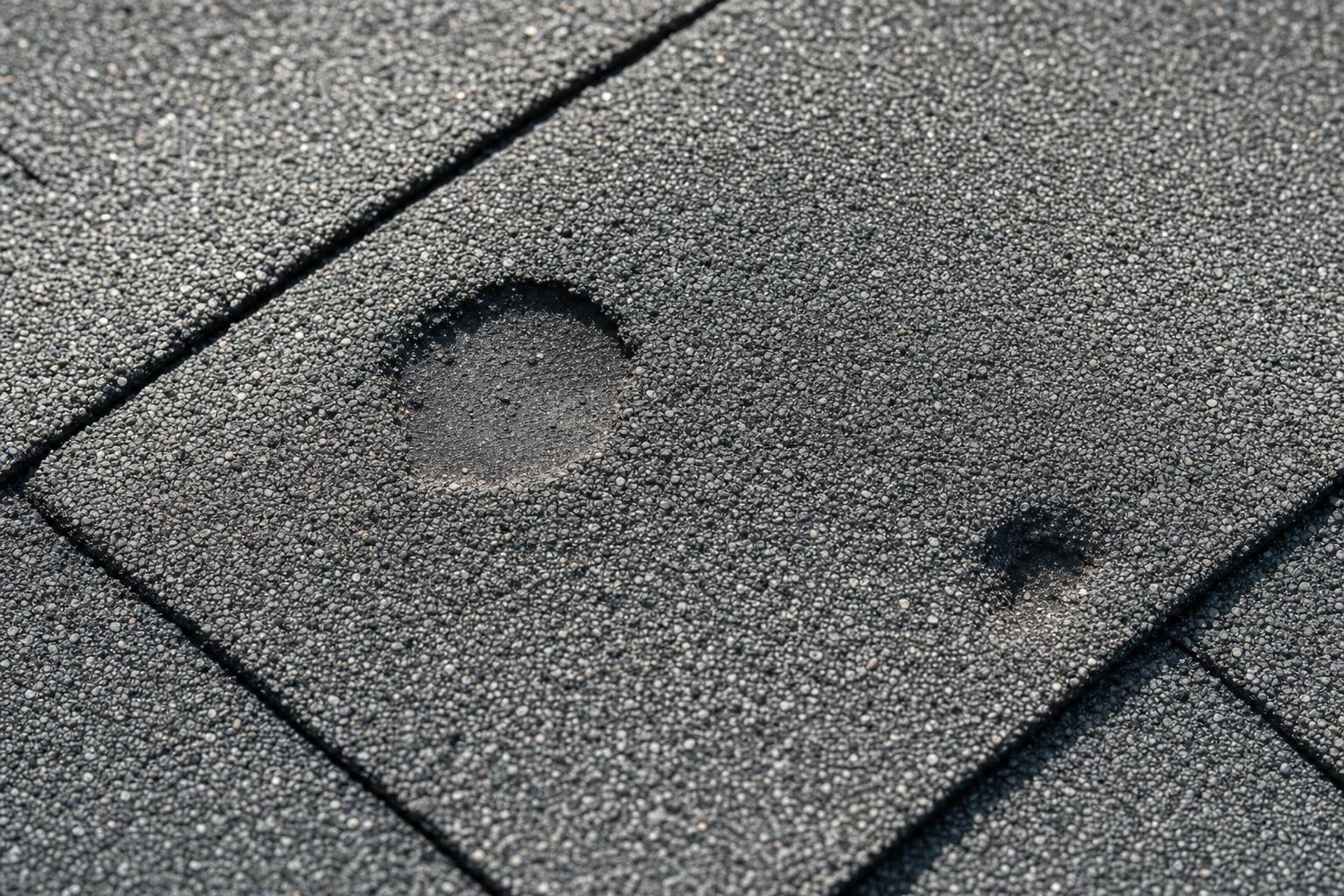
The most common signs of functional hail damage on asphalt shingles:
- Granule loss: Dark patches on shingles where the protective granule coating has been knocked off by impact. Granules protect the asphalt mat from UV degradation. Once granule loss reaches a certain threshold, the shingle’s rated lifespan drops significantly.
- Bruising: Soft spots beneath the shingle surface caused by impact. Press your thumb into the shingle surface. If it gives like a bruise on fruit, the mat is compromised.
- Fracture lines and cracks: Visible splits in the shingle, especially on 3-tab or older architectural shingles.
- Damage to soft metals: Gutters, downspouts, roof vents, pipe jacks, and flashing dent on contact with hail. This damage is easy to document and often the clearest proof of a storm event.
An important thing most homeowners don’t know: damage to gutters and soft metals alone can establish the date of loss and storm severity for your entire claim. A trained inspector will document these even when shingle damage is borderline.
Step 1: Document Before You Touch Anything
The morning after a storm is your most important window. Before any repairs, cleanup, or contractor visits, document everything.
How to document hail damage to your roof:
- Write down the storm date and approximate time. Your insurer will verify this against weather data for your zip code.
- Photograph and video your gutters, downspouts, roof vents, AC unit fins, and any soft metal surfaces at ground level. These are the easiest to access and often show the clearest impact marks.
- If safe to do so (or if a contractor assists), photograph actual shingle surfaces. Look for the dark granule-loss patches and impact craters described above.
- Photograph any interior evidence of water intrusion: ceiling stains, wet insulation in the attic, damaged drywall.
- Keep screenshots or printouts of NOAA storm reports or weather service records for your address and date. The NWS Rapid City office maintains storm event data that can support your claim documentation.
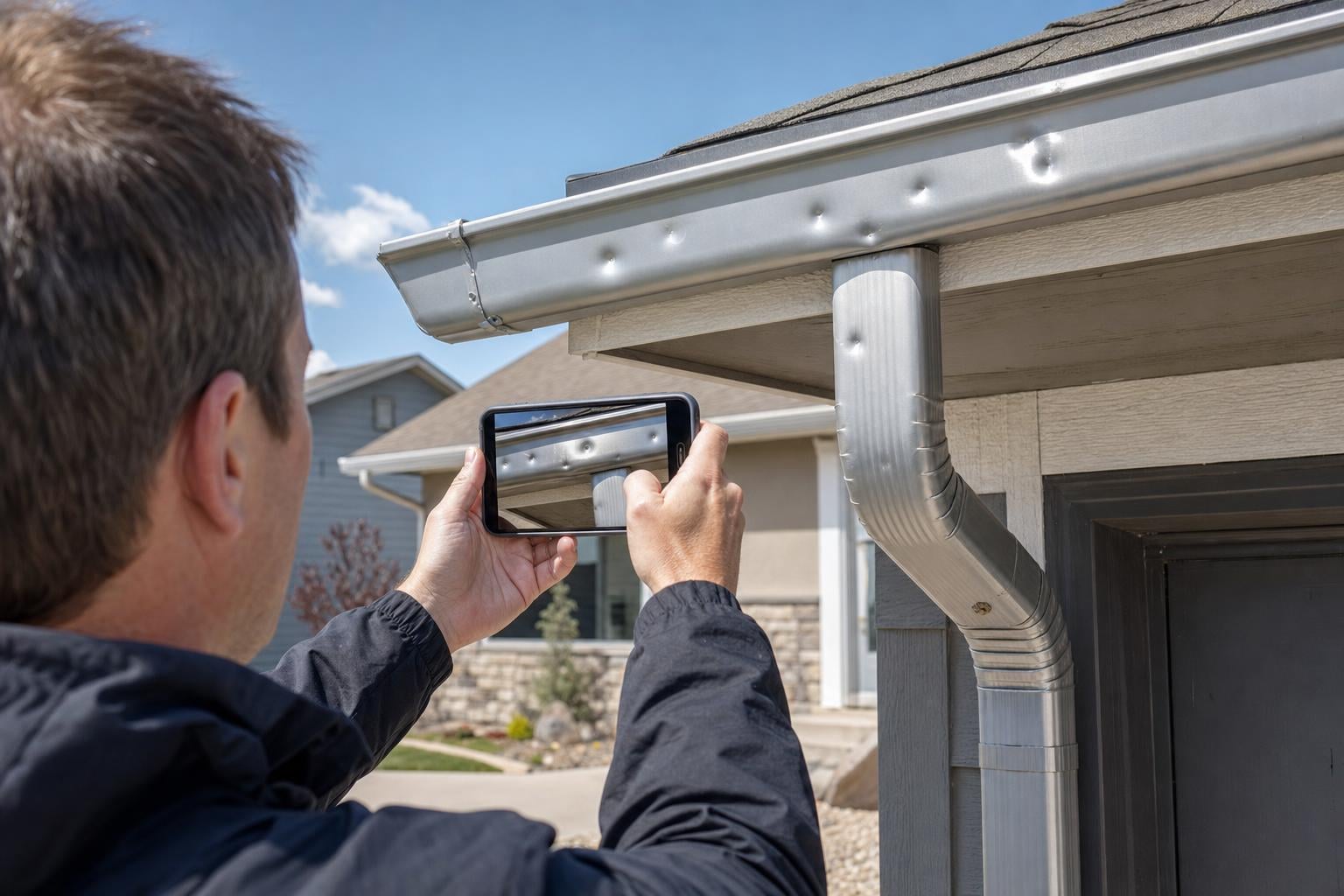
Do not let a contractor begin any work before this documentation is complete. Storm chasers in particular will pressure homeowners to sign authorization forms immediately after a storm. That signature can complicate your claim. Document first, sign nothing until you’ve spoken with your insurer.
If there’s an active leak causing interior damage, emergency tarping to prevent further water intrusion is reasonable and typically covered as mitigation. Just photograph the damage before the tarp goes on.
Step 2: Call a Local Roofer Before You Call Insurance
This is the step most online guides get backwards.
Your insurer will send an adjuster. Adjusters are professionals, but their job is to assess damage efficiently and accurately within the scope they’re trained for. They don’t always catch every line item. Having a qualified local contractor present at the adjuster meeting, with their own independent inspection documentation in hand, consistently produces more complete claim outcomes.
Call K1 Roofing or another licensed local contractor first. Ask for a free written inspection report before you file. This gives you an independent assessment of the damage that you can place side-by-side with the adjuster’s estimate.
A good contractor will document items that are easy for an adjuster to miss: pipe jack collars, drip edge, ridge cap, attic ventilation damage, and interior decking condition. These items are part of a proper roof replacement scope, and they belong in your claim.
K1 Roofing offers free written inspections for Rapid City homeowners at no obligation. There’s no cost to get a professional assessment before you file.
Step 3: What to Expect When You File Your Claim
Once your documentation is ready and you have a contractor’s inspection report in hand, contact your insurance company to report the loss.
A few things to understand before you call:
Your deductible is probably a percentage, not a flat dollar amount.
Most South Dakota homeowners insurance policies for hail and wind damage carry a separate wind and hail deductible, often expressed as a percentage of your home’s insured value. The South Dakota Division of Insurance notes that these deductibles commonly range from 1% to 2%. On a home insured for $350,000, a 1% hail deductible means $3,500 out of pocket before your coverage applies, regardless of whether the repair costs $10,000 or $40,000.
ACV vs. RCV: this distinction changes your payout significantly.
- Actual Cash Value (ACV) policies pay the depreciated value of your roof. If you have a 30-year shingle that’s 15 years old, the insurer considers it roughly 50% depreciated. They pay half the replacement cost, and you’re responsible for the rest plus your deductible.
- Replacement Cost Value (RCV) policies pay the full cost to replace your roof at today’s prices, minus your deductible. The most common policy type for primary homes in South Dakota is RCV.
What the claim filing window looks like:
Most SD homeowners insurance policies allow you to file a hail damage claim up to one year from the date of loss. Don’t delay unnecessarily, but don’t rush into filing before your documentation is solid.
After you file, your insurer will schedule an adjuster visit to inspect the property. This is the critical meeting covered in the next section.
Step 4: The Adjuster Visit and Protecting Your Payout
The adjuster visit is where most homeowners lose money without knowing it.
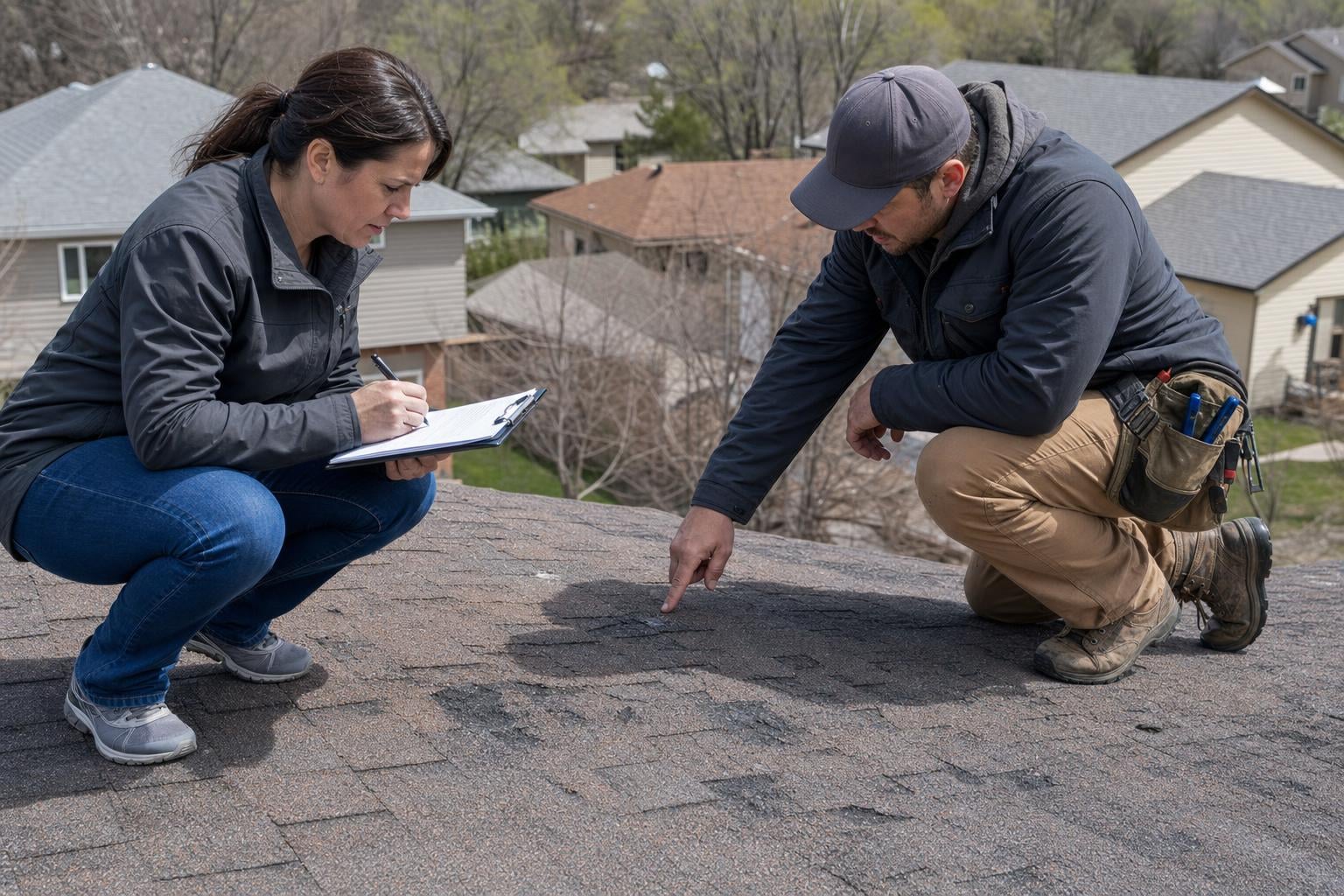
Insurance adjusters use estimating software (most commonly Xactimate) to produce a scope of loss, which is a line-by-line estimate of the work required. This estimate becomes the basis for your initial payout. The problem is that adjusters work quickly, often cover multiple properties in a single day, and can miss line items that are unquestionably part of a proper replacement.
Common items adjusters miss on Rapid City claims:
- Pipe jacks and collar replacements (required when new shingles are installed)
- Drip edge replacement (damaged by hail impact and required code item in most SD jurisdictions)
- Ridge cap replacement (often separately damaged and separately costed)
- Overhead and profit (a standard line item for general contractor coordination that adjusters sometimes exclude)
- Attic ventilation inspection and correction
- Interior damage from any water intrusion before or during repair
Have your contractor present at the adjuster meeting.
This is the single highest-value action you can take. A contractor who understands Xactimate line items can walk through the property with the adjuster, flag missed items in real time, and present the independent inspection report as reference. Many homeowners who do this receive a more complete initial estimate.
Supplemental claims: the initial estimate is rarely the final one.
If the adjuster’s estimate misses line items, your contractor can submit a supplemental claim after the initial check is issued. This is standard practice and not adversarial. Industry data indicates that initial adjuster estimates commonly capture only 50 to 65% of actual replacement costs, with supplemental claims recovering the remainder. A contractor who knows the line items and how to document them can make a meaningful difference in your final settlement.
Do not cash and deposit your first insurance check as full and final settlement without reviewing the scope of loss with your contractor first.
Understanding Your Payout: The Two-Check System
If you have an RCV policy, your insurance payout typically arrives in two stages. This confuses a lot of homeowners.
Check 1: The ACV payment.
After the adjuster visit, your insurer issues a check for the actual cash value of the repair, minus your deductible. This is the depreciated value, not the full replacement cost. For a $20,000 replacement on a roof with $6,000 in recoverable depreciation and a $4,000 deductible: your first check is approximately $10,000.
Check 2: The depreciation release.
Once your contractor completes the work and submits the final invoice to the insurer, the held-back depreciation ($6,000 in the example above) is released as a second payment. Your total insurance payout equals the full replacement cost minus your deductible.
One important note: if your contractor completes the job for less than the original estimate, the insurer pays depreciation only up to the actual invoiced amount. You cannot pocket the difference between the estimate and the actual cost.
Will filing a hail claim raise your premium?
No. Wind and hail damage events are classified as “acts of God” by South Dakota insurance regulations. Insurers in SD set rates based on regional risk, not individual claim history for weather events. Filing a legitimate hail claim should not affect your renewal premium.
Should You Upgrade to Class 4 Shingles During Your Claim?
A hail damage claim is the best possible time to upgrade to Class 4 impact-resistant shingles, and most Rapid City homeowners don’t know this option exists.
Here’s why the math works in your favor:
Your insurance company pays for your roof to be replaced with materials of like kind and quality. If your current roof has standard architectural shingles, that’s what they cover. The upgrade to Class 4 impact-resistant shingles typically costs $150 to $200 more per roofing square. On a 20-square roof, that’s a $3,000 to $4,000 upgrade cost paid out of pocket on top of your deductible.
In return, most home insurers in hail-active markets offer discounts of 15 to 30% on annual premiums for Class 4 rated roofing materials. Discount amounts vary by carrier, so confirm the specific percentage with your insurance agent before finalizing your upgrade decision. On most policies in the Rapid City area, that discount recovers the upgrade cost within two to three years.
Class 4 shingles carry a UL 2218 impact resistance rating, the highest available for asphalt roofing, and are designed specifically for markets like Rapid City with frequent hail exposure. They also carry longer manufacturer warranties. CertainTeed’s Class 4 lines, installed by a certified contractor, qualify for the extended SureStart Plus warranty available only through ShingleMaster certified contractors like K1 Roofing.
If you’re replacing a storm-damaged roof anyway, this is the moment to make the upgrade. Ask your contractor to include both the standard and Class 4 options in their estimate so you can compare the numbers against your expected premium savings.
For a full comparison of roofing materials for Rapid City’s climate, see our roof replacement cost guide.
How to Spot a Storm Chaser vs. a Trusted Local Contractor
Every major hail event in Rapid City brings out-of-state contractors into the Black Hills. They’re called storm chasers. Identifying them before you sign anything protects both your claim and your roof.
Red flags that indicate a storm chaser:
- They knock on your door within 24-48 hours of a storm and pressure you to sign immediately
- They cannot provide a South Dakota contractor license number on request
- They offer to waive your deductible. This is insurance fraud in South Dakota and voids your coverage
- They ask you to sign an Assignment of Benefits (AOB) form that transfers your claim rights directly to them
- They have no local address, no local reviews, and no verifiable history in the Rapid City area
- Their materials are unfamiliar brands not commonly available from local suppliers
What a legitimate Rapid City roofing contractor looks like:
Local contractors carry verifiable South Dakota licensing, maintain local offices and crews, and have years of verifiable reviews from Rapid City-area homeowners. They’ll give you a written estimate before asking you to sign anything, and they’ll be here for warranty work two years after the job is done.
K1 Roofing has been based in Rapid City for over 30 years. Licensed, insured, and CertainTeed ShingleMaster certified. When the storm chasers leave town, K1 is still here.
The Claim Process, Simplified
Most Rapid City homeowners who file a hail damage claim walk away paying only their deductible, with a fully replaced roof and a stronger warranty than they had before. The process works, but it requires attention to the steps that protect your payout.
Document damage before touching anything. Get a contractor’s written inspection before the adjuster arrives. Understand the ACV vs. RCV distinction in your policy before you file. Have your contractor present at the adjuster meeting. Review any scope of loss carefully before accepting it as final.
The difference between a well-managed claim and an underpaid one usually comes down to preparation and representation at the adjuster visit. Homeowners who come prepared, with independent documentation and a contractor who knows the line items, consistently receive more complete settlements.
K1 Roofing offers free written inspections for Rapid City homeowners after storm events. No obligation. No pressure. Just an honest assessment of your roof and what your claim should cover. Contact K1 to schedule yours before the adjuster shows up.
For pricing context on what a full roof replacement costs after your claim is settled, read our Rapid City roof replacement cost guide.
Frequently Asked Questions
How long do I have to file a hail damage claim in South Dakota?
Most South Dakota homeowners insurance policies allow claims up to one year from the date of loss. Check your specific policy, but don’t wait longer than necessary, since storm evidence fades and adjusters look for age of damage.
Does filing a hail claim raise my insurance premium?
No. Wind and hail damage is classified as an act of God under South Dakota insurance guidelines. Insurers set regional rates, not individual-claim rates for weather events.
What is recoverable depreciation?
If you have an RCV policy, your insurer initially pays the depreciated (lower) value of your roof. After the work is completed and invoiced, the held-back depreciation is released as a second payment. The total equals full replacement cost minus your deductible.
Do I need a contractor at the adjuster visit?
You’re not required to have one, but having a contractor present who can document missed line items and reference their independent inspection report consistently produces more complete estimates.
What is a supplemental claim?
If the adjuster’s initial scope of loss missed covered line items, your contractor can submit a supplemental claim with documentation of the omissions. This is standard practice and can recover thousands of dollars in missed coverage.
![Roof Maintenance Checklist for Rapid City, SD: The Year-Round Homeowner’s Guide [2026]](https://www.k1roofinginc.com/wp-content/uploads/2026/05/k1-roofing-inc-roof-maintenance-rapid-city-sd-featured-400x250.jpeg)
![Commercial Roof Replacement in Rapid City, SD: The Complete Guide for Building Owners [2026]](https://www.k1roofinginc.com/wp-content/uploads/2026/05/k1-roofing-inc-commercial-roof-replacement-rapid-city-sd-featured-400x250.jpeg)
0 Comments