
Rapid City sits in one of the most hail-active corridors in the United States. According to tracking data from Interactive Hail Maps, Doppler radar has detected hail at or near the city more than 222 times historically, with 13 events recorded in just the past year. For a roof installed today, the expected number of measurable hail events over a 25-year service life is somewhere between 10 and 15.
Class 4 impact-resistant shingles cost roughly $150 to $200 more per roofing square than standard architectural shingles. On a typical 20-square Rapid City home, that’s a $3,000 to $4,000 upgrade. Every homeowner considering the question runs the same math: does the upgrade pay back?
This guide answers it specifically for the Rapid City market. South Dakota’s 1-2% wind and hail deductible structure, the carrier-specific Class 4 premium discounts available locally, the manufacturer comparison across CertainTeed, GAF, and Owens Corning, the honest payback period, and the situations where the upgrade isn’t worth it.
K1 Roofing Inc. has been based in Rapid City for over 30 years and is CertainTeed ShingleMaster certified, which qualifies K1 homeowners for the extended SureStart Plus warranty on Class 4 installations. The pricing and discount context below reflects what’s actually available in this market in 2026, not national averages.
What Are Class 4 Impact-Resistant Shingles?
A Class 4 impact-resistant shingle is an asphalt shingle engineered to withstand higher-velocity impacts than a standard architectural shingle. The engineering difference is structural, not cosmetic.
Standard architectural shingles are made of an asphalt mat embedded with mineral granules. Class 4 versions add a polymer modification, typically styrene-butadiene-styrene (SBS) modified asphalt, sometimes paired with a polymer-reinforced backing or fiberglass mat. The polymer modification gives the shingle elasticity, so when a hailstone hits, the material deforms slightly and absorbs the energy rather than fracturing.
Every major asphalt-shingle manufacturer makes a Class 4 line:
- CertainTeed Landmark IR and NorthGate ClimateFlex
- GAF Timberline AS II
- Owens Corning Duration FLEX (with SureNail technology)
- Atlas StormMaster Shake
Visually, Class 4 shingles often look slightly thicker than standard architectural and have a denser texture. The manufacturer marking (UL 2218 Class 4) is printed on the back of the shingle or on the bundle wrapper. A reputable installer will show you the bundle wrapper before installation if you ask.

The UL 2218 Standard, Explained
The “Class 4” designation comes from Underwriters Laboratories standard UL 2218, the recognized impact-resistance test for roofing materials in the United States.
The test method is concrete and visual. A steel ball of a specified diameter is dropped from a specified height onto the shingle surface. If the shingle shows no cracking or fracture on its back after the impact, it passes that class. There are four classes, from Class 1 (least impact-resistant) to Class 4 (most impact-resistant).
For Class 4, the test uses a 2-inch diameter steel ball dropped from 20 feet. The shingle must withstand this impact without splitting, cracking, or showing damage to the underside of the mat. To put 20 feet in context, a 2-inch steel ball dropped from 20 feet hits with roughly the energy of a 2-inch hailstone moving at terminal velocity in a typical thunderstorm.
Two things matter here. First, Class 4 doesn’t mean “hail-proof.” A larger or harder hailstone (3 inches or more) can still cause damage. Second, the test measures impact resistance, not aesthetic durability. A Class 4 shingle might still show surface scuffing or granule loss from a hail event, but the underlying mat that protects the structure stays intact.
Why Class 4 Matters in Rapid City Specifically
The Class 4 upgrade math is different in Rapid City than in markets that see hail once every few years. The hail frequency here changes the calculation.
Doppler radar has detected hail at or near Rapid City more than 222 times historically, and 13 events were recorded in the past year alone. Even averaged out, a roof installed today should expect 10 to 15 measurable hail events over its 25-to-30-year service life. Some of those will be small events that don’t damage either standard or Class 4 shingles. Some will be large events that overwhelm both. The interesting middle band, hailstones in the 1.5 to 2.5 inch range, is exactly where Class 4 shingles distinguish themselves: standard architectural will typically need replacement after one of these events, Class 4 typically won’t.
If a Class 4 roof in Rapid City survives even 2 to 3 of those middle-band events without needing replacement, the homeowner avoids paying their wind and hail deductible 2 to 3 times. At a typical 1% deductible on a $350,000 home, that’s $3,500 saved per avoided claim. Two avoided claims pay for the upgrade twice over.
The math is unique to high-frequency hail markets. National guides don’t run it because they don’t know your local frequency. Rapid City homeowners do.
The Insurance Discount Math (Carrier + SD Deductible)
The annual insurance discount is the second source of return on the Class 4 upgrade, and the math is more straightforward than most homeowners realize.
The South Dakota Division of Insurance documents that most homeowners insurance policies in SD carry a separate wind and hail deductible, typically expressed as 1% to 2% of the home’s insured value. On a $350,000 home, that’s $3,500 to $7,000 out of pocket per hail claim before the carrier pays anything.
The wind and hail portion of the annual premium is usually the largest single component of a homeowner policy in this market. Most major carriers in SD offer a Class 4 discount on this portion, typically ranging from 15% to 30% of the wind and hail premium [VERIFY exact percentage with your carrier]. Discounts vary by carrier, so confirm before you commit.
Concrete example. A $350,000 home in Rapid City with a 1% deductible. The wind and hail portion of the annual premium is roughly $2,400 [VERIFY against current SD market rates]. A 20% Class 4 discount saves $480 per year on the premium. Over a 25-year roof life, that’s $12,000 in cumulative premium savings on top of any avoided claim deductibles.
The discount applies for as long as the Class 4 roof is in service. The Class 4 upgrade cost is one-time. The math compounds in the homeowner’s favor over the roof’s life.
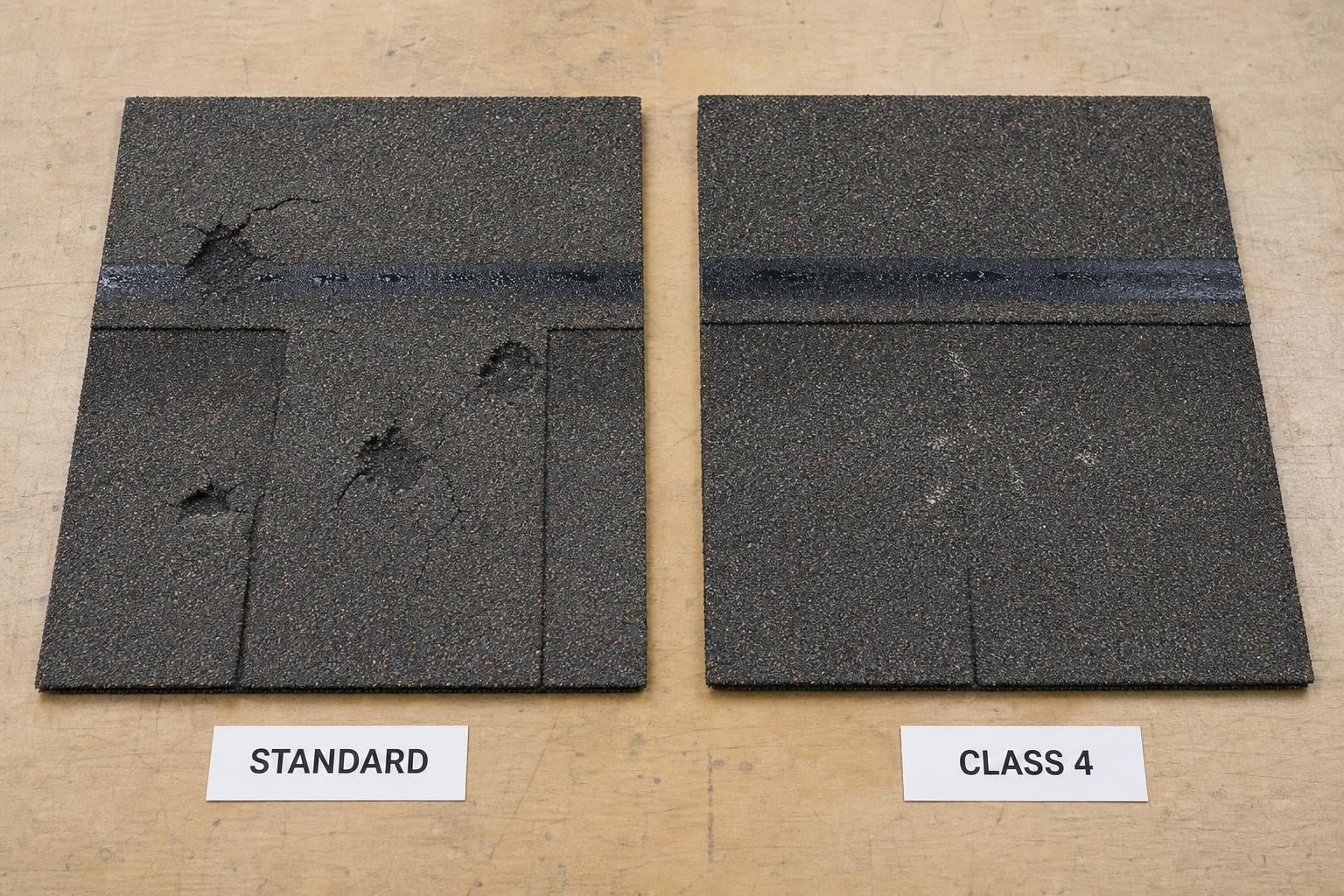
Class 4 vs Standard Architectural: Side-by-Side
The two options side-by-side, for a typical Rapid City installation.
| Factor | Standard Architectural | Class 4 Impact-Resistant |
|---|---|---|
| Cost per square (2026 Rapid City) | $500 to $650 | $650 to $800 |
| UL 2218 impact rating | Class 2 or 3 | Class 4 (highest) |
| Manufacturer warranty length (with certified installer) | Up to 30 years | Up to 50 years |
| Lifespan in Rapid City hail conditions | 20 to 25 years | 25 to 35 years |
| Annual insurance premium discount eligibility | No | Yes (most SD carriers) |
| Typical full-roof premium over standard | (no upgrade premium) | $3,000 to $4,000 |
The comparison isn’t apples-to-apples on price alone. The upgrade includes a longer manufacturer warranty (when installed by a certified contractor), a higher impact-resistance rating, and discount eligibility. The right comparison is annual cost-of-ownership across the roof’s full service life.
What Class 4 Costs in Rapid City (2026)
Direct pricing for the 2026 Rapid City market, in concrete numbers.
The per-square premium for Class 4 over standard architectural runs $150 to $200 in 2026. A typical 20-square Rapid City home pays a $3,000 to $4,000 total upgrade premium. On smaller homes (12-15 squares), the premium is $1,800 to $3,000. On larger homes (25+ squares), the premium is $3,750 to $5,000+.
Variation by manufacturer line:
- CertainTeed Landmark IR sits at the entry tier of Class 4 pricing.
- GAF Timberline AS II is typically priced near Landmark IR.
- Owens Corning Duration FLEX sometimes runs slightly higher due to the SureNail technology.
- Premium designer lines (CertainTeed Presidential IR, GAF Grand Sequoia AS) carry a meaningful additional premium for aesthetic upgrades, not impact resistance.
The cost numbers above assume installation by a certified contractor with full tear-off, decking inspection, ice and water shield, and proper ventilation. Stripping any of those out to lower the price is how shortcut installers price below this range, and it’s how Class 4 roofs underperform their rated lifespan.
For full pricing context across all material types, see the Rapid City 2026 roof replacement cost guide.
The Payback Period and Real ROI
The honest math on when the Class 4 upgrade earns itself back.
Three sources of return on the upgrade:
- Annual insurance premium discount. $480/year on the example above (20% discount on a $2,400 wind and hail premium). Compounds annually for the life of the roof.
- Avoided deductible payments. Each hail event the Class 4 roof survives without a claim saves a deductible payment ($3,500 to $7,000 in SD). Frequency of events the Class 4 roof survives versus standard depends on hailstone size, but conservatively 1 to 3 over the roof’s life in a market like Rapid City.
- Extended manufacturer warranty. When installed by a certified contractor, Class 4 lines qualify for warranties up to 50 years (vs 25-30 for standard with the same installer). The extended warranty is manufacturer-backed, so it survives even if the installing contractor goes out of business.
Payback period range for a typical Rapid City installation:
- On premium discount alone: $3,500 upgrade / $480 saved per year = 7.3 years
- Including one avoided deductible: payback drops to roughly 4 years
- Including two avoided deductibles: payback drops to under 1 year (the deductible savings alone cover the upgrade)
The roof lasts 25 to 35 years. The upgrade pays back within the first 5 to 10 years for most Rapid City homeowners, then continues generating savings for the remaining 15 to 25 years of the roof’s life.
Class 4 isn’t always the right choice (see the “When It Isn’t Worth It” section below), but in a 222-event hail market, the math favors the upgrade for most homeowners with a 5+ year time horizon in the home.
CertainTeed, GAF, Owens Corning: Comparing the Major Class 4 Lines
A cross-brand comparison of the three major Class 4 product families, written by a local installer with no manufacturer bias. Each has trade-offs.
CertainTeed Landmark IR (and NorthGate ClimateFlex)
- Polymer modification: SBS-modified asphalt mat
- Aesthetic: thicker shadow line than standard Landmark, multiple color options
- Warranty path: ShingleMaster installers can extend to the SureStart Plus 50-year warranty
- Available through K1 Roofing Inc. (CertainTeed ShingleMaster certified)
GAF Timberline AS II
- Polymer modification: similar SBS-modification
- Aesthetic: GAF’s distinctive shadow band
- Warranty path: Master Elite installers can extend to the Golden Pledge warranty
- Available through GAF Master Elite contractors in the area
Owens Corning Duration FLEX
- Polymer modification: triple-layer reinforcement with SureNail technology
- Aesthetic: clean traditional architectural look
- Warranty path: Platinum Preferred installers extend to the Platinum Protection warranty
- Available through Owens Corning Platinum Preferred contractors
The functional impact-resistance performance across all three is comparable at the UL 2218 Class 4 level. The differences that matter for a Rapid City homeowner: aesthetic preference, color availability in your specific market, the certification level of locally available installers, and which carrier-specific manufacturer the insurance discount references (most discounts are brand-neutral, but check before you choose).
A neutral local installer’s read: pick the line where you have a verifiable certified installer with strong local references, then make the aesthetic call.
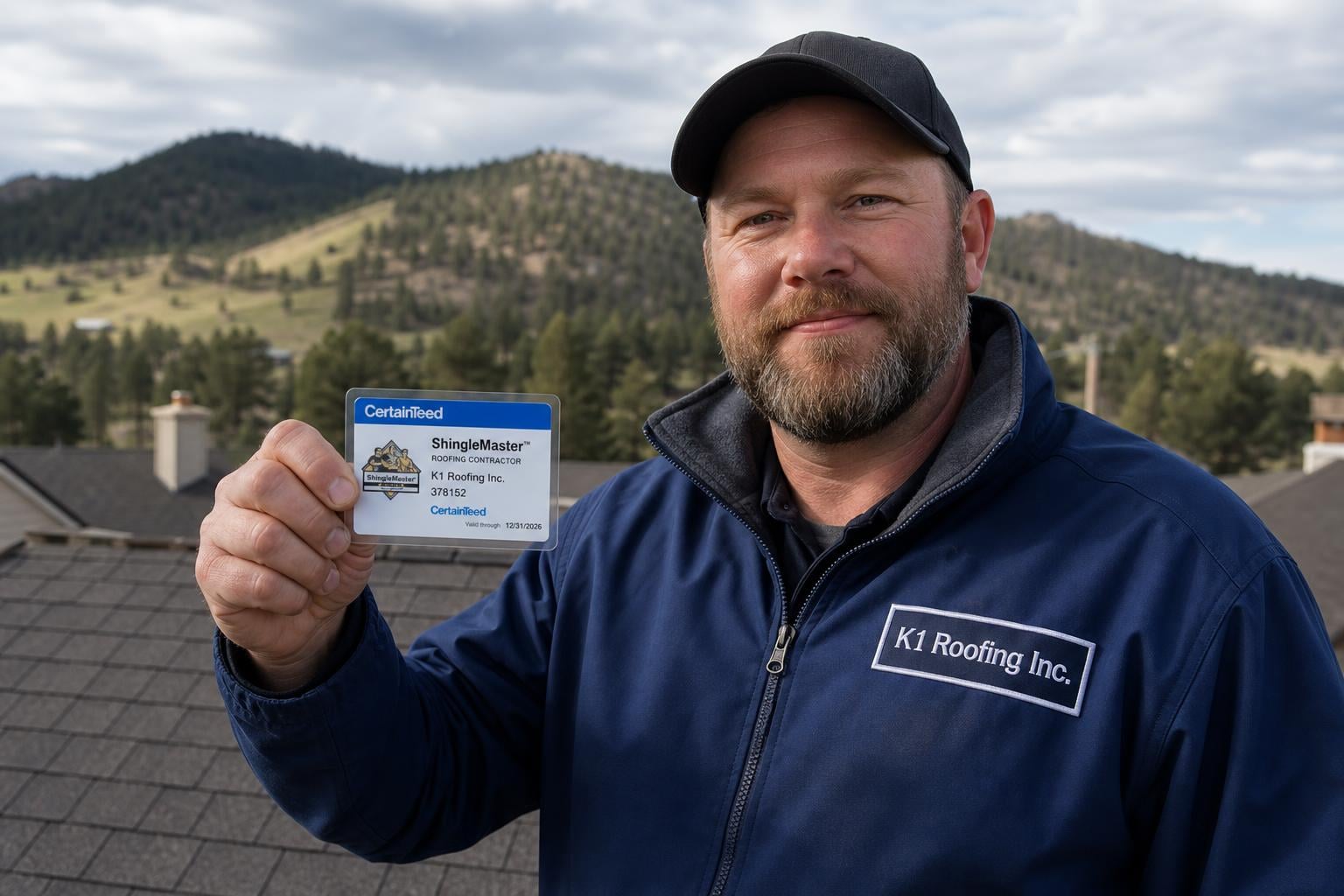
The ShingleMaster Advantage
Manufacturer certifications matter for Class 4 specifically because the extended warranty paths are only available through certified installers.
The CertainTeed ShingleMaster credential requires advanced installer training, ongoing continuing education, full general liability and workers’ compensation insurance, a clean customer-complaint history, and a multi-year application process. The same applies to GAF Master Elite and Owens Corning Platinum Preferred at their respective certification tiers.
The practical difference: a ShingleMaster-installed Class 4 roof qualifies for CertainTeed’s SureStart Plus, a 50-year extended warranty that includes both material and workmanship coverage, manufacturer-backed. A non-certified installer’s Class 4 installation typically defaults to the standard limited warranty (about 25-30 years) regardless of the shingle’s rated lifespan.
The premium for a certified installer over a non-certified one is usually modest, often within $500 to $1,500 on a typical residential job. The warranty value over 50 years more than offsets the premium.
K1 Roofing Inc. is CertainTeed ShingleMaster certified and installs CertainTeed Class 4 lines for Rapid City homeowners. The certification is verifiable in the CertainTeed contractor directory.
When Class 4 ISN’T Worth It
The honest counter-argument. Class 4 is not always the right call.
You’re selling the home within 5 years. The insurance premium discount needs runway to pay back the upgrade cost. If the home is going on the market soon, the Class 4 upgrade doesn’t recover the premium in time. Standard architectural with a strong workmanship warranty is the better economic choice.
Your carrier doesn’t offer a meaningful Class 4 discount. Most SD carriers do, but a few don’t, and a few offer only a token 3-5% discount that doesn’t materially change the math. Confirm the discount with your specific carrier before deciding.
Your home is structurally protected from typical hail impacts. Heavily tree-shielded properties, low-aspect roofs with significant overhang protection, or homes in microclimates that historically see less direct hail impact may not benefit from the upgrade as much as the regional average suggests.
Your roof complexity makes the upgrade premium disproportionate. On a complex roof with many valleys, hips, and dormers, the per-square upgrade premium gets multiplied by a high effective square count. The dollar math may not favor the upgrade on these properties.
Most Rapid City homes don’t fall into these categories, but a small fraction do, and an honest installer will tell you when standard is the better economic choice.
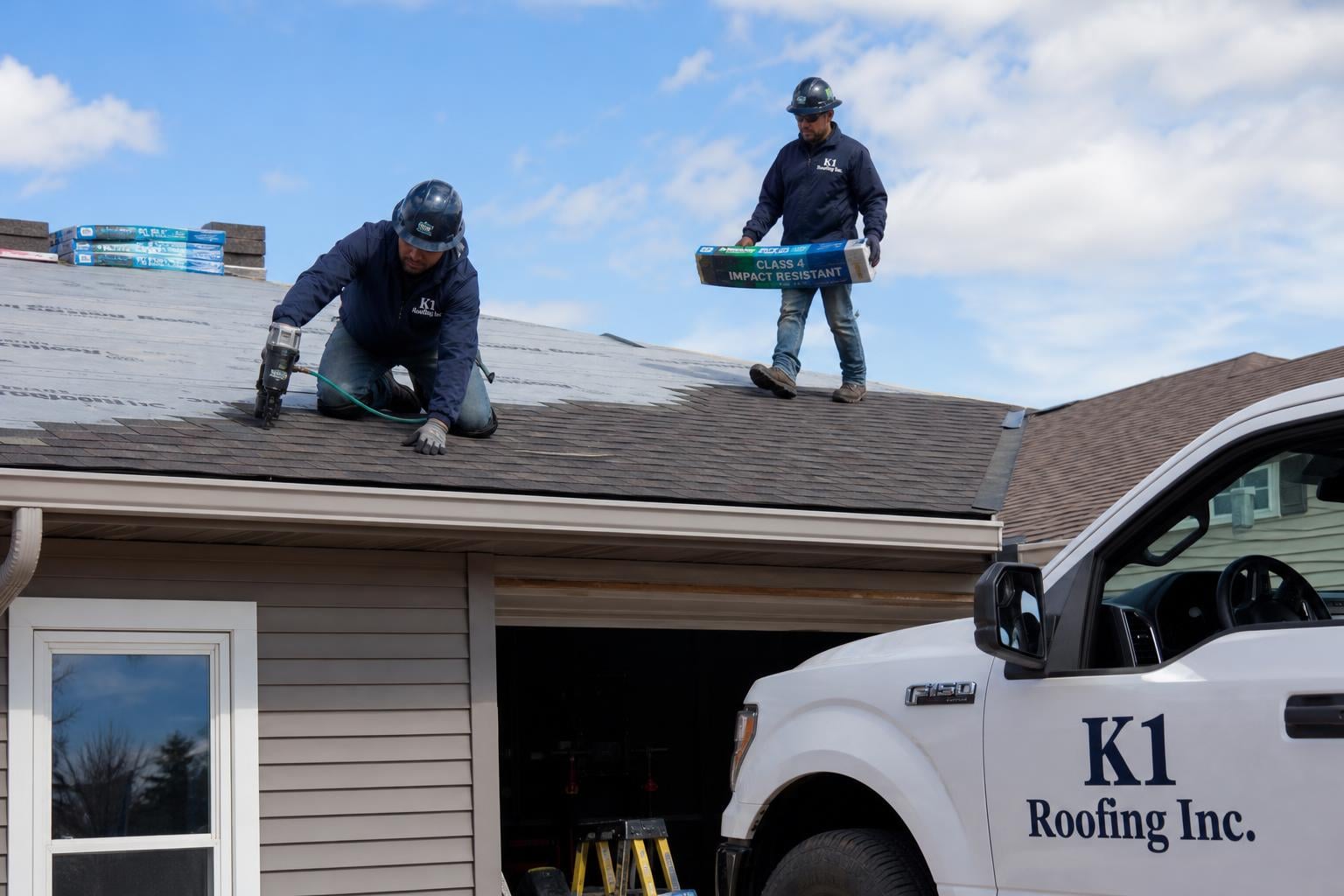
How K1 Roofing Inc. Installs Class 4 in Rapid City
K1’s Class 4 installation process, in plain terms.
K1 Roofing Inc. is CertainTeed ShingleMaster certified, which qualifies K1 customers for the extended SureStart Plus warranty on Class 4 installations. The certification is verifiable in the public CertainTeed contractor directory.
The installation process includes full tear-off (no overlay), decking inspection and replacement of any soft or compromised sheathing, ice and water shield installation in valleys and at eaves per code, proper attic ventilation review, drip edge replacement, pipe jack and flashing replacement (not reused), and ridge cap installation matched to the field shingle line. Class 4 specifically requires careful nailing pattern adherence to maintain the impact rating; K1 follows CertainTeed’s published nailing specification.
K1 provides free written estimates that include both standard architectural and Class 4 options side-by-side, with the upgrade premium broken out. The estimate also includes an estimate of the insurance discount based on the homeowner’s specific carrier (the carrier provides the actual percentage in writing post-installation).
If you want the full framework for vetting any roofing contractor in this market, see the Rapid City contractor verification framework. For context on how a Class 4 install fits into a hail damage insurance claim, see our hail damage claim guide.
How to Confirm Your Insurance Carrier Offers the Discount
Before signing for a Class 4 upgrade, call your insurance carrier. Ask three specific questions.
1. Do you offer a Class 4 impact-resistant roof discount on the wind and hail portion of my policy? Most SD carriers do, but the percentage varies. A “yes” answer is the green light to proceed with the upgrade analysis; a “no” or “minor only” answer changes the math.
2. What’s the exact discount percentage, and how is it applied? Some carriers apply the discount to the full premium, others to just the wind and hail portion. Some apply it as a flat dollar reduction. Get the answer in writing, ideally via email so you have documentation.
3. What proof of Class 4 installation do you require? Common documentation: the contractor invoice listing the specific Class 4 product line installed, a copy of the manufacturer’s certified-installer warranty, and sometimes an exterior photo of the bundle wrapper showing the UL 2218 Class 4 marking. A reputable contractor provides all three.
A few carriers require a post-installation inspection by their own agent before the discount activates. Most apply the discount automatically once the documentation is provided.
The carrier conversation takes 10 minutes. Make the call before you sign for the upgrade, not after.
The Upgrade Math in a Hail Market
In a market with 222+ historical hail events, the Class 4 upgrade math favors most homeowners with a 5-plus year time horizon. The annual premium discount alone pays back the upgrade within 7 to 10 years. Add a single avoided deductible and the payback drops to under 5 years. Add the extended manufacturer warranty and the upgrade pays back the rest of the roof’s service life as pure savings.
The decision isn’t whether Class 4 is better technology than standard architectural. It’s whether the payback math works for your specific situation. For most Rapid City homeowners staying in the home for the next 5+ years, with a carrier that offers a meaningful Class 4 discount, on a typical residential roof, the math favors the upgrade.
K1 Roofing Inc. provides free written estimates with both standard and Class 4 options side-by-side. The estimate breaks out the upgrade premium, the estimated annual insurance discount, and the payback period for your specific home. No commitment.
Frequently Asked Questions
Are Class 4 shingles worth it in Rapid City? For most Rapid City homeowners staying in the home for 5+ years, yes. The combination of South Dakota’s 1-2% wind and hail deductible structure, the 222+ historical hail events in this market, and the 15-30% premium discount most SD carriers offer on Class 4 roofs means the upgrade typically pays back within 5 to 10 years and then continues generating savings for the remaining 15 to 25 years of the roof’s service life. Confirm the specific discount with your carrier before committing.
How much do Class 4 shingles cost compared to standard? In 2026 Rapid City pricing, Class 4 impact-resistant shingles cost $150 to $200 more per roofing square than standard architectural shingles. On a typical 20-square home, that’s a $3,000 to $4,000 total upgrade premium. The exact number depends on the roof’s complexity and the specific manufacturer line chosen.
Do Class 4 shingles actually lower insurance premiums in South Dakota? Most major SD carriers offer a Class 4 discount on the wind and hail portion of the premium, typically in the 15-30% range. Discounts vary by carrier, so confirm with your specific provider before committing to the upgrade. The discount applies for as long as the Class 4 roof is in service, so the savings compound annually over the 25-35 year roof life.
What does UL 2218 mean? UL 2218 is the Underwriters Laboratories impact-resistance test for roofing materials. A 2-inch steel ball is dropped from 20 feet onto the shingle. Class 4 is the highest of four classes; the shingle must withstand the impact without splitting, cracking, or showing damage to the underside of the mat. Class 4 doesn’t mean “hail-proof” but does mean the shingle absorbs significantly more impact energy than standard architectural before failure.
How long do Class 4 shingles last? In Rapid City’s hail-frequency conditions, expect 25 to 35 years of service life from a properly installed Class 4 roof, compared to 20 to 25 years from standard architectural. When installed by a manufacturer-certified contractor (CertainTeed ShingleMaster, GAF Master Elite, or Owens Corning Platinum Preferred), the manufacturer warranty extends up to 50 years.
Does K1 Roofing install Class 4 shingles? Yes. K1 Roofing Inc. is CertainTeed ShingleMaster certified, which qualifies customers for the extended SureStart Plus warranty on Class 4 installations. K1 provides free written estimates that include both standard architectural and Class 4 options side-by-side with the insurance discount estimate.
![Roof Maintenance Checklist for Rapid City, SD: The Year-Round Homeowner’s Guide [2026]](https://www.k1roofinginc.com/wp-content/uploads/2026/05/k1-roofing-inc-roof-maintenance-rapid-city-sd-featured-400x250.jpeg)
![Commercial Roof Replacement in Rapid City, SD: The Complete Guide for Building Owners [2026]](https://www.k1roofinginc.com/wp-content/uploads/2026/05/k1-roofing-inc-commercial-roof-replacement-rapid-city-sd-featured-400x250.jpeg)
0 Comments