
After every major hail event in the Black Hills, the trucks with out-of-state plates show up the same week. They park along the curbs. Two men get out, one with a clipboard. They knock on every door on the block, sometimes three or four blocks deep. Most of them will be in a different state in 90 days.
The math is straightforward. Rapid City has more than 222 historical hail events recorded by Doppler radar, with 13 in just the past year. A typical Rapid City hail claim runs $10,000 to $30,000 or more. Multiply that across a few hundred homes per neighborhood and you have a payout opportunity worth crossing state lines for. That’s the lure.
This guide explains exactly what storm chaser roofers are, how the scam works step by step, the red flags you can spot in five minutes, the South Dakota fraud laws that protect you, and what to do if you’ve already signed something you wish you hadn’t.
K1 Roofing Inc. has been based in Rapid City for over 30 years. We’ve watched the storm-chaser cycle play out after every major hail event in that time. The pattern is consistent enough that you can recognize it before the first knock on your door.
What Is a Storm Chaser Roofer, Exactly?
A storm chaser roofer is a roofing salesperson, usually paid on commission, employed by an out-of-area contractor that follows major hail and wind events from market to market. They are not, in most cases, the people who would actually install your roof. They sell the job, sign the contract, and hand the file to an in-house crew (or subcontractor) before moving with the company to the next storm market.
The National Insurance Crime Bureau documents this pattern across the storm belt: a major hail event produces a surge of out-of-state contractors operating within 24-72 hours, peaking around 30 days post-storm, and largely gone by day 90. They follow the insurance money, not the customer relationships.
This is different from a legitimate national roofing company with a permanent local office, local crew, and a five-year-plus history of Rapid City work. The distinction matters: a legitimate contractor will still answer the phone in 2031 if your installation has a defect. A storm chaser cannot, because the company no longer operates in this market by then.
Why Rapid City Is a Storm Chaser Target Market
Three factors put Rapid City near the top of the target list every year.
Hail frequency. The Black Hills sit in one of the most hail-active corridors in the United States. Most homeowners in Rapid City will file at least one hail claim during their time in the home. That guaranteed volume is what makes the market profitable to chase.
South Dakota’s deductible structure. Most SD homeowners insurance policies carry a separate wind and hail deductible, typically expressed as 1% to 2% of the home’s insured value. The South Dakota Division of Insurance documents the structure. On a $350,000 home with a 1% deductible, the homeowner is responsible for $3,500. The insurance carrier covers the rest of a covered claim. Storm chasers know this math better than most homeowners do.
Low barriers to short-term operation. South Dakota does not have a unified statewide residential roofing license. Pennington County and the City of Rapid City require contractor registration and building permits on replacement-scale jobs, but enforcement during a post-storm surge is uneven. An out-of-state operator can be in town, pull permits under a temporary registration, and be gone before any complaint moves through the system.
The combination produces a predictable target: high-value claims, repeat events, and 90-day operating windows. That’s why they keep coming back.
How the Scam Actually Works (Operational Anatomy)
Most warning guides list red flags. Few explain how the scam mechanically works. Understanding the cycle helps you recognize each stage as it happens.
Step 1: Recruitment. The contracting company hires sales staff at high commission rates (often 10-20% of the project value). These are sales jobs, not skilled trades. The salespeople are commonly recruited from outside the roofing industry entirely.
Step 2: Storm tracking. The company monitors NOAA, weather radar, and hail-prediction services. When a major event hits a market with favorable insurance and licensing conditions, crews are dispatched within 24-72 hours.
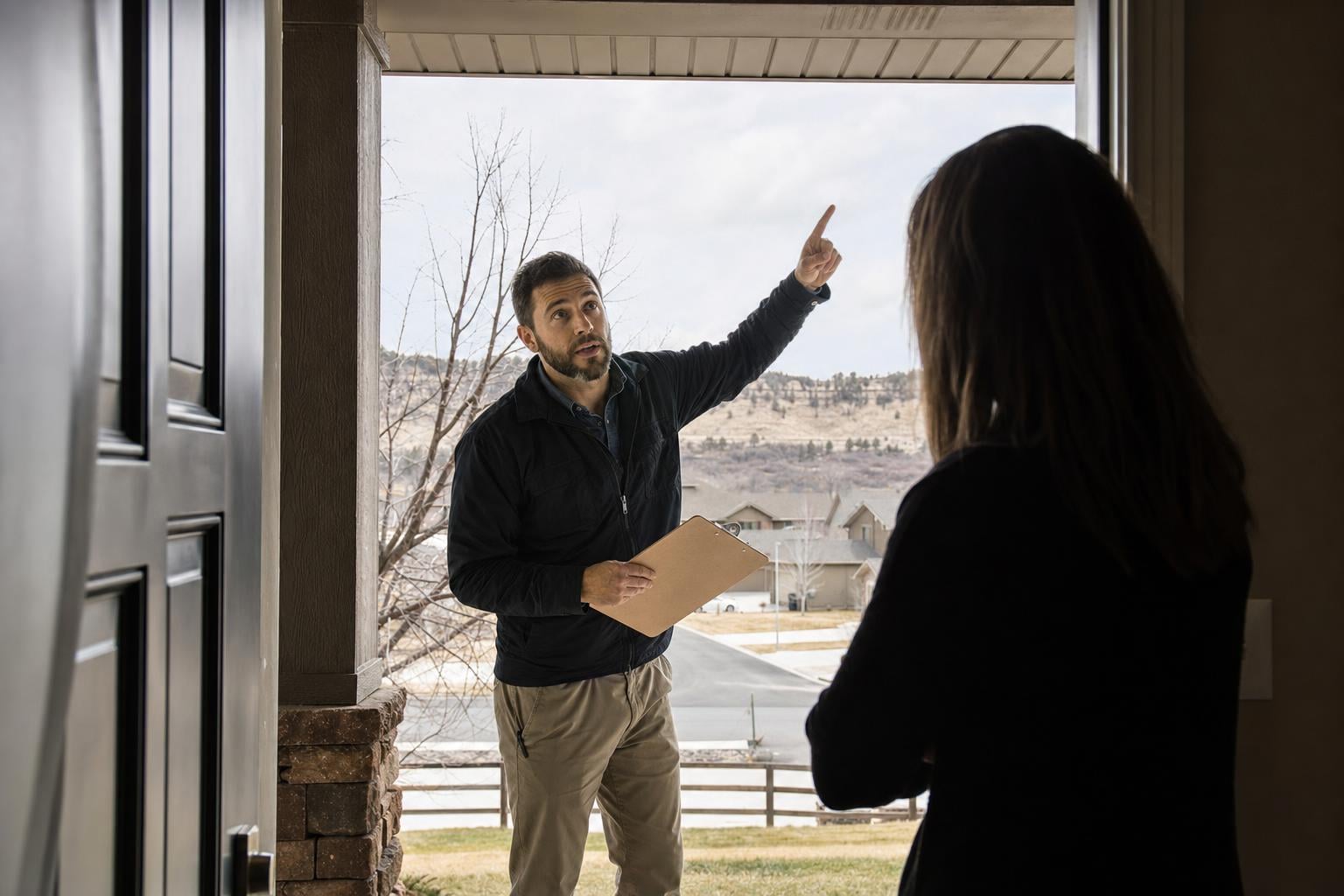
Step 3: Saturation door-knock. Two-person sales teams canvas every house in the storm path, prioritizing neighborhoods with insurance-favorable property values. Their pitch: a free roof inspection, “concerning damage” found in five minutes on the roof, and pressure to sign an authorization form on the spot.
Step 4: Inflated claim filing. The contractor either files the insurance claim on the homeowner’s behalf (often via an Assignment of Benefits form the homeowner signed without understanding) or coaches the homeowner to maximize the claim scope. Damage that wasn’t from the storm may get added to the scope.
Step 5: Cash and leave. The job gets done quickly, often with shortcuts on tear-off, decking inspection, ventilation, and code compliance. The insurance check clears. The contractor moves to the next storm market. Within 90 days, the local phone number stops being answered.
The homeowner is left with a roof that may have material warranty (those follow the shingles) but no functional workmanship warranty, because the installing contractor is no longer operationally local. Three years later when a leak appears, there’s nobody to call.
The 6 Tactics They Use
These are the operational signatures of storm chaser sales. Any one of them should slow the conversation down. Two or more should end it.
Door-to-door pressure within 24 to 72 hours of the storm. Legitimate Rapid City contractors do not need to canvas neighborhoods. Their phones ring after a storm. A salesperson appearing on your porch within three days of a hail event is operating on a chase model.
Free roof inspection pitch with five-minute “damage” assessment. Free inspections are not inherently bad, K1 offers them too. The signal is the pitch combined with the speed: a stranger on a ladder for five minutes who comes down with a confident damage diagnosis is selling, not inspecting. A real inspection involves walking the roof, photographing specific damage indicators, checking soft metals, and producing a written report.
Offers to “waive” or “absorb” your deductible. This is illegal in South Dakota. The SD Division of Insurance treats deductible waivers as insurance fraud, which voids the homeowner’s policy and exposes them to legal liability. Any roofer who offers this is asking you to commit fraud with them.
Assignment of Benefits (AOB) forms. An AOB transfers your insurance claim rights to the contractor. Once signed, the contractor negotiates with your insurer directly, can settle for amounts you don’t control, and can use your claim in ways that may not serve your interest. Reputable local contractors don’t require AOBs.
Damage inflation or “created” damage. A small number of storm chasers will cause hail-like impact damage during a roof “inspection” to make the claim viable. This is criminal vandalism and insurance fraud. It’s also why a homeowner should never let an unverified roofer on the roof without first having an independent assessment.
High-pressure same-day contract demands. A contractor who can’t give you 48 hours to verify their license and read the contract is a contractor who knows you won’t sign it after you’ve read it. Walk away.
7 Red Flags You Can Spot in 5 Minutes
These are the verifiable signals you can check at the door, on the phone, or in the first email exchange.
- The work truck has out-of-state plates and there is no local Rapid City business address.
- The salesperson cannot provide a South Dakota contractor registration number on request.
- The materials they reference are unfamiliar brands not commonly available from local Rapid City suppliers.
- They request a cash deposit before any work begins.
- They push you to sign before your insurance carrier has inspected the property.
- They offer to handle “the whole insurance side” without you involved.
- A search of the company name plus “Rapid City” returns no verifiable reviews older than 18 months.
If three or more of these are present, you are almost certainly looking at a storm chaser operation. Do not sign anything. Get a written inspection from a contractor with a Rapid City history older than the most recent storm season.
The AOB Trap and the Deductible-Waiver Trap
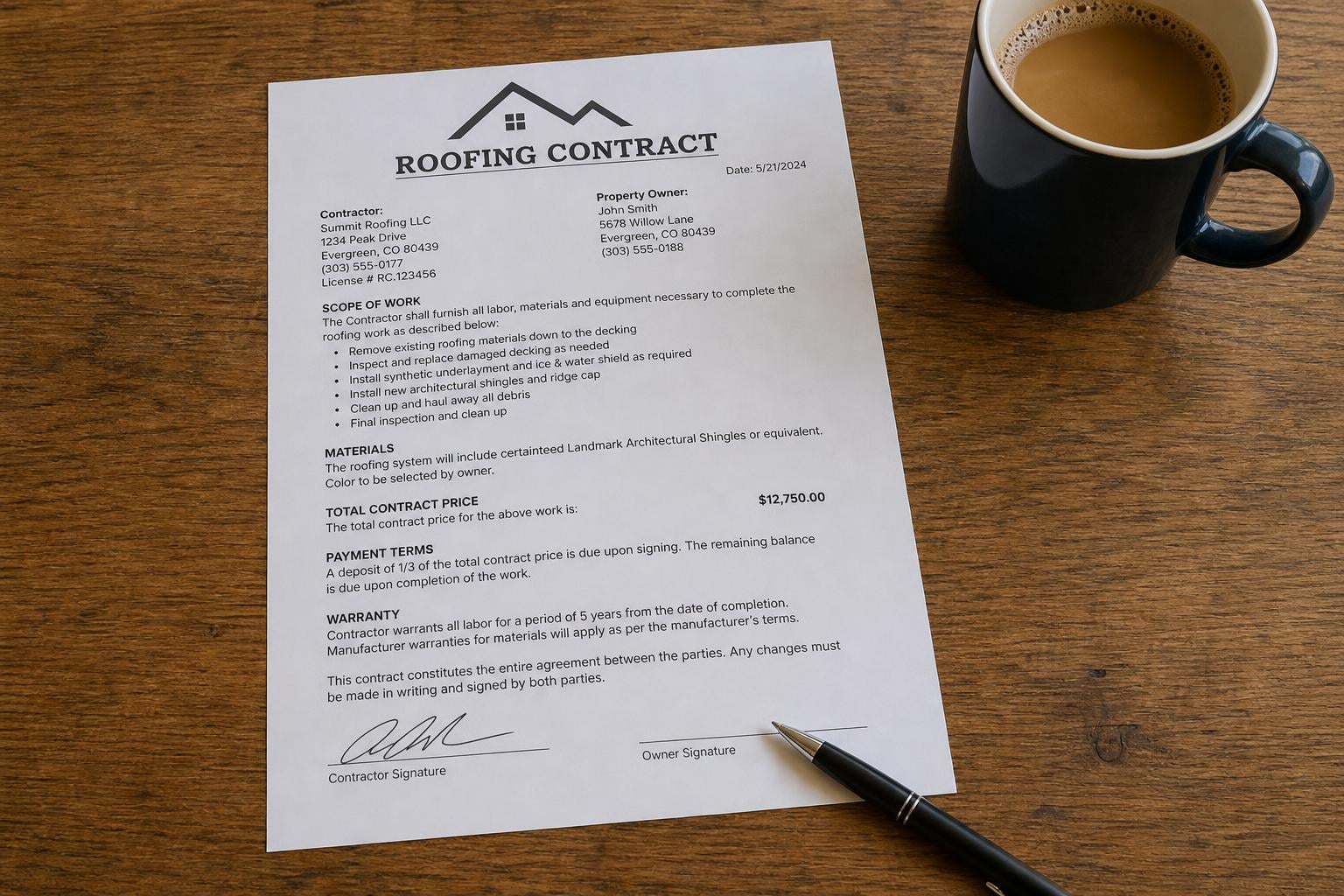
Two specific contract clauses are how storm chasers extract maximum revenue from your insurance claim at your legal expense. Both deserve their own section.
Assignment of Benefits (AOB). This is a one-page form that transfers your insurance claim rights directly to the contractor. The contractor can then file, negotiate, and settle the claim without your direct involvement. Some AOBs also waive your right to dispute the contractor’s invoice. Once signed, you may have very limited ability to undo the transfer. The form often gets buried in a stack of paperwork at the same moment you’re being asked to sign the authorization to begin work.
If a contractor asks you to sign anything labeled “Assignment of Benefits” or that includes language transferring your “claim rights” or “insurance proceeds rights” to them, stop the conversation. A legitimate local contractor will work alongside your insurance process without ever requiring an AOB. For a full walkthrough of how a legitimate hail damage claim should be filed, see our hail damage insurance claim guide.
Deductible waiver. Some contractors offer to “absorb,” “eat,” or “waive” your insurance deductible as a sales incentive. In South Dakota, this is insurance fraud. The SD Division of Insurance and most homeowners insurance carriers classify it as a form of premium misrepresentation: by waiving the deductible, the contractor effectively inflates the claim by the deductible amount, and the homeowner becomes complicit in submitting an inflated claim to the insurer.
The consequence for the homeowner is real. A carrier that discovers the waiver can void the entire claim, cancel the policy, deny future claims, and in rare cases pursue civil recovery. A contractor offering this is not doing you a favor. They are exposing you to legal and financial risk to close their sale.

Why Local Matters in Rapid City Specifically
The structural argument for hiring a local contractor is not about loyalty. It is about who answers the phone in 2031 when your roof needs warranty service.
A Rapid City contractor with a permanent office, local crew, and verifiable five-year-plus history of completed jobs has a meaningful incentive to stand behind their work. They live here. Their reputation is local. Their warranty work isn’t a cost-of-doing-business decision made from another state.
Local also means knowledge of Black Hills weather patterns, Pennington County code specifics, and supplier relationships with the materials warehouses in the area. These matter when a shingle line is back-ordered, when a code item triggers an inspection failure, or when a homeowner needs an emergency tarp at 9 PM on a Friday in November.
For the full framework on vetting a roofing contractor (manufacturer certifications, warranty terms, questions to ask before signing), see the full contractor verification framework.
How to Verify a Roofer Is Legitimate
Before signing anything, run the following verification. Most of it can be done from your phone in under 15 minutes.
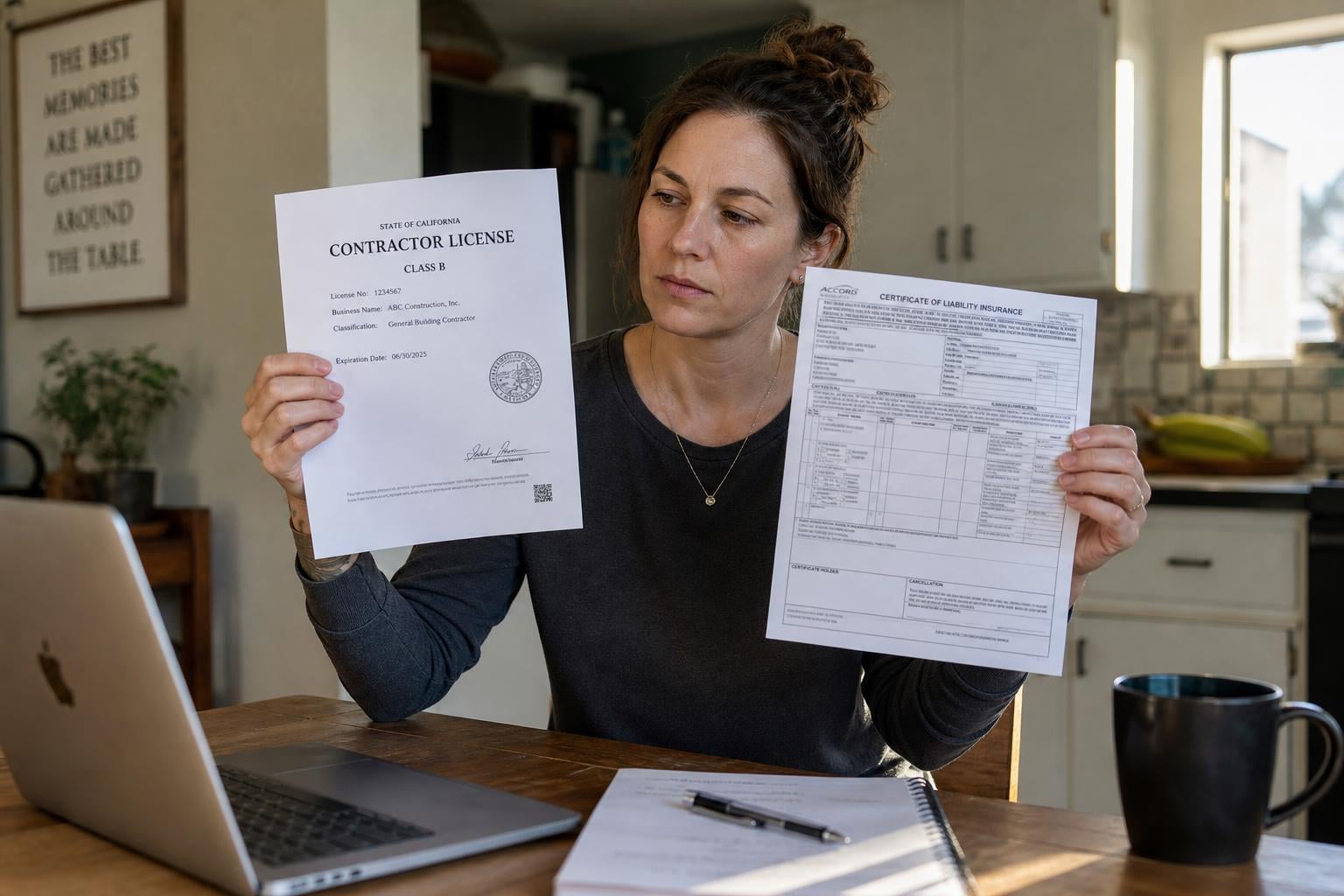
- South Dakota contractor registration. Ask for the company’s SD registration number and look it up via the Department of Labor and Regulation. A contractor who refuses to provide a number on request is not a contractor you should hire.
- Local business registration. Verify the company has a permanent Rapid City or Pennington County business address, not a PO box or a temporary office set up for the storm season.
- General liability and workers’ compensation insurance. Request a current certificate of insurance with both coverages listed. Call the carrier on the certificate to confirm the policy is active. A photocopied or expired certificate is the same as no insurance.
- Manufacturer certifications. CertainTeed, GAF, and Owens Corning all maintain public directories of their certified contractors. If a salesperson claims certification, the directory will confirm or refute it in seconds.
- Better Business Bureau profile. Look up the contractor at BBB Rapid City. Note the length of accreditation and the complaint resolution pattern. A few complaints over many years is normal at scale. A pattern of unresolved complaints in the past 12 months is a red flag.
- Rapid City portfolio. Ask for three addresses in Rapid City where the contractor has completed work in the last 12 months. Drive by. If they cannot provide local addresses, they do not have a local portfolio.
- Five-year references. Ask for references from jobs over five years old, with current phone numbers. New roofs all look good for the first year. The five-year reference is the warranty test.
What to Do If You’ve Already Signed
If you have already signed a contract with a contractor you now suspect is a storm chaser, you may have more time and recourse than you realize. Move quickly, in this order.
Stop work immediately. If no work has started, do not authorize a start. If the crew is on site, ask them to stop. Most legitimate cancellation rights expire once substantial work has begun.
Read the contract for the cancellation clause. Most door-to-door sales contracts are subject to a federal three-day cooling-off rule. The rule (16 CFR Part 429) gives you the right to cancel any contract signed at your home (not at the contractor’s place of business) within three business days, with no penalty. Many state laws also extend this window further.
Send written cancellation by certified mail within three days. A signed letter, sent by USPS certified mail with return receipt, is the legally documented cancellation. Include the contract date, your name and address, the contractor’s name, and a clear sentence: “I am cancelling this contract pursuant to my three-day cooling-off right.” Keep the certified mail receipt.
Notify your insurance carrier in writing. If a claim has already been filed, write to the carrier and inform them you’ve cancelled the contract and the contractor no longer has authorization to act on your behalf. This is especially important if you signed an Assignment of Benefits form.
Contact the South Dakota Attorney General’s Consumer Protection Division. The SD AG consumer protection office handles complaints about door-to-door sales and contractor fraud. File a written complaint with the contract, your cancellation letter, and any communication records.
File a BBB complaint. Report the contractor at BBB Rapid City. The complaint becomes part of the contractor’s public record and helps the next homeowner who searches their name.
Get an independent local inspection. Have a Rapid City contractor with verifiable local history inspect the roof and produce a written assessment of actual damage. This gives you the accurate scope of what should be in the insurance claim, separate from anything the storm chaser may have inflated.
The Cost of Getting It Wrong
The financial damage from a storm chaser scam compounds beyond the obvious losses.
The deductible you paid is generally not recoverable. The insurance claim, if inflated and discovered, can be voided by the carrier. A voided claim may also lead to policy cancellation and difficulty obtaining hail coverage in future. Industry data from insurance fraud sources estimates direct homeowner losses from roofing scams in the $1,500 to $10,000 range per incident [VERIFY exact NICB figure], but the policy and premium consequences can extend the total impact well beyond that.
The roof itself may also fail prematurely. Shortcuts on tear-off, missing ice-and-water shield, inadequate ventilation, and reused flashing all reduce the functional lifespan of an asphalt shingle roof from 25-30 years to as little as 8-12 years. A homeowner who got a “good price” through a storm chaser may face a full replacement again within a decade, this time with no insurance coverage because the previous claim has expired the renewal window.
The right time to avoid this cost is before signing anything.
How K1 Roofing Stacks Up Against Each Red Flag
A direct check against the seven red flags from earlier in this guide.
- Permanent Rapid City business address: yes, in operation since the early 1990s.
- South Dakota contractor registration number on request: yes, provided in writing on any estimate.
- Familiar materials from local suppliers: CertainTeed asphalt shingles, available from regional supply houses.
- Cash deposit demands: no. K1 invoices on milestones tied to insurance claim disbursement.
- Pressure to sign before adjuster inspection: no. K1 recommends the contractor be present at the adjuster meeting and a written inspection precede the claim filing.
- Offers to handle the whole insurance side: K1 attends adjuster meetings and submits supplemental claims when warranted, but the homeowner remains the policyholder and decision-maker throughout.
- Verifiable Rapid City reviews older than 18 months: yes, the K1 portfolio of Rapid City work goes back over 30 years.
K1 Roofing offers free written roof inspections for Rapid City homeowners after storm events at no cost or obligation. The inspection itself is useful even if you choose another contractor: a documented, independent assessment of your roof’s condition gives you a baseline for any conversation that follows.
When the Storm Chasers Leave Town, You’re Still Here
The economics of storm chasing are simple. They monetize a 90-day operating window across multiple markets per year. The roof on your house has a 25 to 30 year operating window. Those time horizons do not align.
A homeowner who hires the contractor who’ll be in Rapid City in 2031 has bought a roof and a warranty. A homeowner who hires the contractor who’ll be in another state by 2026 has bought a roof.
The vetting work in this guide takes a few hours. The roof you’re buying lasts decades. Pick the contractor who’ll still answer the phone when something needs fixing.
Frequently Asked Questions
What is a storm chaser roofer? A storm chaser roofer is a commission-paid salesperson, usually working for an out-of-area contractor that follows major hail and wind events from market to market. They typically appear within 24 to 72 hours of a storm, operate for 30 to 90 days, and move on before any warranty or follow-up work would normally surface. They are different from a legitimate national contractor with a permanent local office and a five-year-plus history of work in the area.
How can I tell if my roofer is a scammer? The fastest five-minute checks: confirm the company has a permanent Rapid City address (not a PO box), ask for the South Dakota contractor registration number and verify it via the SD Department of Labor and Regulation, request current general liability and workers’ compensation certificates and call the carrier to confirm coverage is active, and search the company name plus “Rapid City” for reviews older than 18 months. Any combination of out-of-state plates, refusal to provide license information, cash deposit demands, or pressure to sign immediately is a strong scam indicator.
What should I do if I already signed with a storm chaser? You may still have time to cancel. Federal law (the FTC’s 16 CFR 429 cooling-off rule) gives you three business days to cancel any contract signed at your home, with no penalty. Send written cancellation by certified mail within three days. If you signed an Assignment of Benefits form, notify your insurance carrier in writing that the contractor is no longer authorized to act on your claim. File complaints with the South Dakota Attorney General’s Consumer Protection Division and BBB Rapid City. Then get an independent inspection from a local contractor.
Is offering to waive my deductible illegal in South Dakota? Yes. South Dakota classifies deductible-waiver offers as insurance fraud. The homeowner becomes complicit in submitting an inflated claim to the insurer. Consequences can include claim denial, policy cancellation, future coverage difficulties, and in some cases civil liability. Any contractor who offers to waive your deductible is asking you to commit fraud and exposing you to real legal risk.
Why do I keep getting calls about a free roof inspection? After a major hail event, your address ends up on lead lists that get sold to contractors. The National Insurance Crime Bureau documents this pattern: lead aggregators buy storm-strike data and sell it to roofing companies, who then call or door-knock the affected addresses. Free roof inspection calls are not inherently illegitimate, but a high volume of unsolicited inspection offers within a few weeks of a storm is a sign that your address is on a chase list. Filter aggressively, and only schedule with a contractor whose Rapid City credentials you’ve verified independently.
![Roof Maintenance Checklist for Rapid City, SD: The Year-Round Homeowner’s Guide [2026]](https://www.k1roofinginc.com/wp-content/uploads/2026/05/k1-roofing-inc-roof-maintenance-rapid-city-sd-featured-400x250.jpeg)
![Commercial Roof Replacement in Rapid City, SD: The Complete Guide for Building Owners [2026]](https://www.k1roofinginc.com/wp-content/uploads/2026/05/k1-roofing-inc-commercial-roof-replacement-rapid-city-sd-featured-400x250.jpeg)
0 Comments